Dress code, hours and practical tips
What to wear at Prambanan: visit guide
Dress code, sarongs, shoes, opening hours, Mondays, getting there from Yogyakarta, and what you will actually see at Prambanan Temple.
Book your Prambanan entry ↗Quick answer
Cover your shoulders and knees, wear shoes that will not damage the stone, and bring sun protection. Sarongs have long been lent at the entrance of the operator's Java temple sites, but practice can change, so carry clothing that covers your legs. The park opens in the morning, access is limited on Mondays, and it closes for Nyepi. Allow two to three hours for the main complex, and more if you add the Sewu temple.
The dress code in short
Prambanan is a Hindu temple compound, and Hindu communities hold ceremonies there. Dress as you would for a place of worship: cover your shoulders and knees. General temple guidance from the Jakarta Post says the same. The operator has lent batik sarongs to visitors at Prambanan, Borobudur and Ratu Boko, and reports from 2010 to 2013 describe visitors in shorts or short skirts being asked to wrap one over their clothes. Whether that is enforced on your day is for the gate to say, so wear covered clothing and treat a sarong as a backup. Light, loose cotton in long trousers or a long skirt covers you and still lets you walk comfortably in the heat.
Shoes and what to carry
Wear shoes with soft soles and no sharp fixings: the Jakarta Post advises against footwear that could damage the temple stones. The paths are uneven and there are stairs, so choose something you can walk in for hours. Comfortable clothing, a hat and sunscreen are recommended for the visit. Outside food, drinks, smoking and alcohol are not allowed. The terms of the operator's sunset programme require prior approval for tripods, drones and commercial shoots, so ask before you bring any of them. Under the same terms, personal, non-commercial photos on a phone or camera are allowed.
- Covered shoulders and knees
- Soft-soled, closed or secure shoes
- A hat and sunscreen
- Leave drones and tripods at the hotel
Opening hours, Mondays and closure days
The operator's ticket page gives a daily opening time of 06:30 WIB. Closing and last-entry times are not stated the same way everywhere, and last entry can be earlier than closing, so check on the day you go. On Mondays access is limited for maintenance, and the area around the three main temples can be closed. The park also closes for Nyepi, the Balinese day of silence, on a date that changes each year; in 2026 the operator announced 19 March, with the park reopening the next day. If your dates are near a Hindu holiday, expect ceremonies on the grounds and check for access changes.
Getting there from Yogyakarta
Prambanan is about 17 kilometres east of central Yogyakarta, close to the Yogyakarta to Solo highway. You can go by taxi or private car, by intercity bus, by Trans Jogja city bus, or by commuter train; Wikipedia places Brambanan station roughly 750 metres from the compound. The entry ticket has no transfer, while tours add pick-up. If you combine Prambanan with Borobudur, allow for the drive between them, which is about an hour and a half on some tours. A taxi or private car is the simplest choice if you have luggage or are travelling as a group.
Read next: Getting to Prambanan from Yogyakarta
How long to allow
Plan on two to three hours for the main complex. That is enough to walk around the three main temples and read the reliefs without hurrying. The operator describes its Prambanan admission as also covering the Lumbung, Bubrah and Sewu temples and the Prambanan Museum, so add time if you want them. Because you cannot re-enter after leaving, decide before you go out whether you have seen what you came for. Sewu is a Buddhist temple complex north of the main group, so it adds a different style to the visit.
Sun, weather and crowds
The compound is open-air, and you walk between the temples outside, so sun cover matters at any hour. Holiday periods bring more visitors: the operator's 2026 Nyepi notice said tourist numbers in Yogyakarta were expected to rise over a holiday period that coincided with Eid al-Fitr, and a 2013 report predicted more visitors at Prambanan during the Eid holidays. If you can choose, avoid those weeks. Check the operator's channels close to your date for anything that restricts access to part of the site.
What you actually see
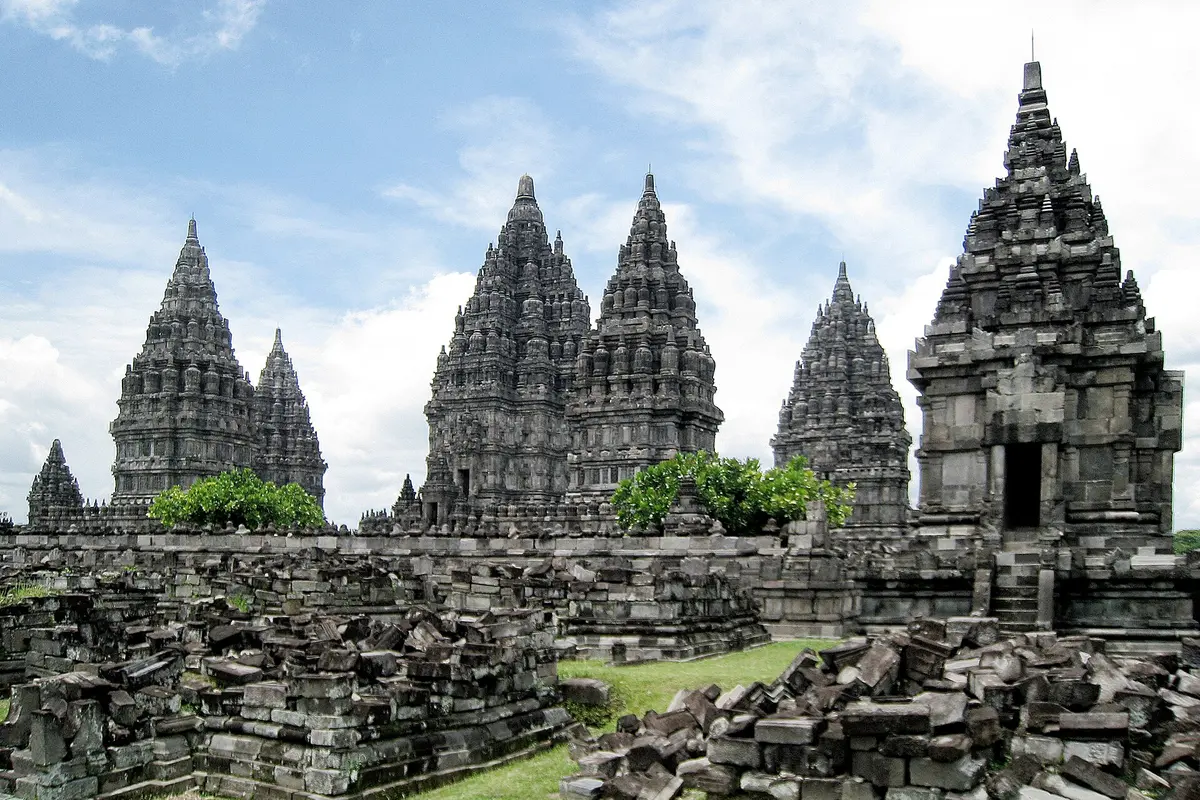
The tallest building is the Shiva temple at 47 metres, with the Brahma and Vishnu temples beside it at 33 metres. Wikipedia reports that all eight main temples and eight small shrines in the inner zone are reconstructed, while only six of the original 224 smaller temples have been rebuilt, which is why you see rows of fallen stone. The 2006 earthquake damaged the complex and closed it for some weeks. Reconstruction continues on the smaller temples. Inside the main temples are chambers reached by stairs, so if stairs are hard for you, you can still see the outside and the reliefs from the paths.
Reading the Ramayana reliefs
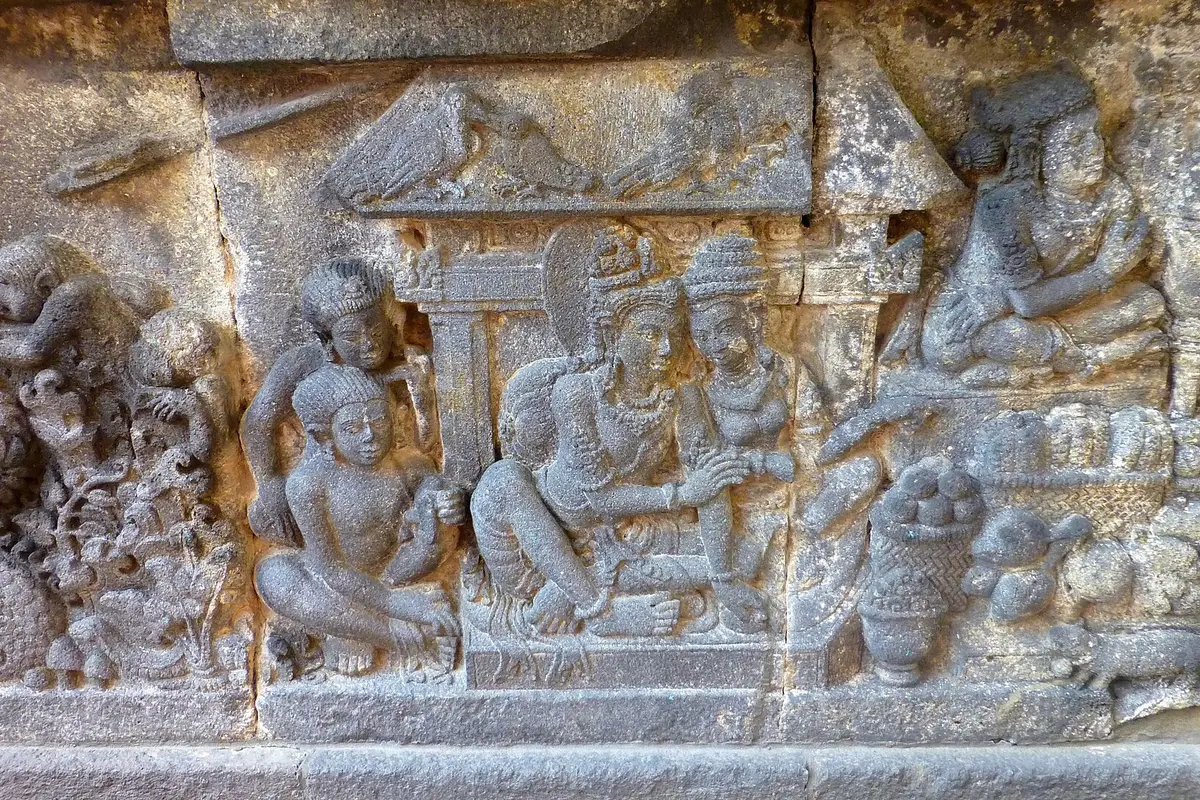
The Ramayana is carved along the inner balustrade wall of the Shiva temple and continues on the Brahma temple. The story starts at the east entrance, where you turn left and walk clockwise, keeping the temple on your right, as pilgrims do when they circle a shrine. The Vishnu temple carries scenes of Krishna instead. A guide helps with the panels, but the order is easy to follow once you know where to begin.
Ceremonies and respect
Prambanan is also a working place of worship. Wikipedia reports that, since the main temples were rebuilt in the 1990s, Balinese and Javanese Hindu communities have returned to hold annual ceremonies there, including Galungan, Tawur Kesanga and Nyepi. The Jakarta Post advises visitors to keep their distance and stay quiet during ceremonies, not to climb on the stupas, and to be respectful toward worshippers. That is easy to do: lower your voice, step aside, and ask before taking a photograph of anyone praying.
Children, access and language
Children aged 0 to 2 are admitted free on the entry ticket. The grounds are described as pushchair- and wheelchair-accessible, but some paths are uneven and there are stairs, so check what your group can manage. Host or greeter support is available in English and Indonesian. Children need the same covered clothing as adults, and a hat matters more for them than you might expect on an open-air site, and a shaded pause between temples helps. If anyone in your group needs help, ask staff at the entrance on arrival.
Who this isn't for
If you want an empty temple, Prambanan cannot promise one, because holidays and weekends bring crowds. If you will not cover your legs, you may be asked to wrap a sarong at the gate. If stairs and uneven paths are a problem, you will see less than other visitors do. And if you want to stand beside the main temples on a Monday, plan another day, because access is limited then.
Frequently asked questions
What is the dress code at Prambanan?
Cover your shoulders and knees. Sarongs have been lent at the entrance of the operator's Java temple sites, but wear covered clothing in case none are offered on your day.
Are shorts allowed at Prambanan?
Reports from 2010 to 2013 describe visitors in shorts or short skirts being given a sarong to wrap over them at the operator's temples. Rules can change, so wear long trousers or a long skirt to be safe.
What time does Prambanan open?
The operator's ticket page lists a daily opening time of 06:30 WIB. Closing and last-entry times can differ, so check on the day, especially on Mondays and around Nyepi.
Is Prambanan open on Mondays?
Partly. Access is limited on Mondays for maintenance, and the area around the three main temples can be closed. Check the operator's channels before you go.
How do I get to Prambanan from Yogyakarta?
Prambanan is about 17 kilometres east of central Yogyakarta. Take a taxi, a private car, an intercity or Trans Jogja bus, or the commuter train to Brambanan station.
How long should I allow for Prambanan?
Plan on two to three hours for the main complex. Allow more if you add the Lumbung, Bubrah and Sewu temples or the museum.
Sources
- Prambanan Temple ticket (official ticket site)
- Kala Senja Prambanan programme terms (InJourney Destination Management)
- Prambanan Temple closed for Nyepi 2026 (InJourney Destination Management)
- Dos and don'ts of visiting temples (The Jakarta Post, 2019)
- More temples plan ban on mini skirts and shorts (The Jakarta Post, 2010)
- Temple tourists told to cover up (TravelMole, 2012)
- Tourists flock to Borobudur and Prambanan during Eid holidays (Republika, 2013)
- Prambanan (Wikipedia)